
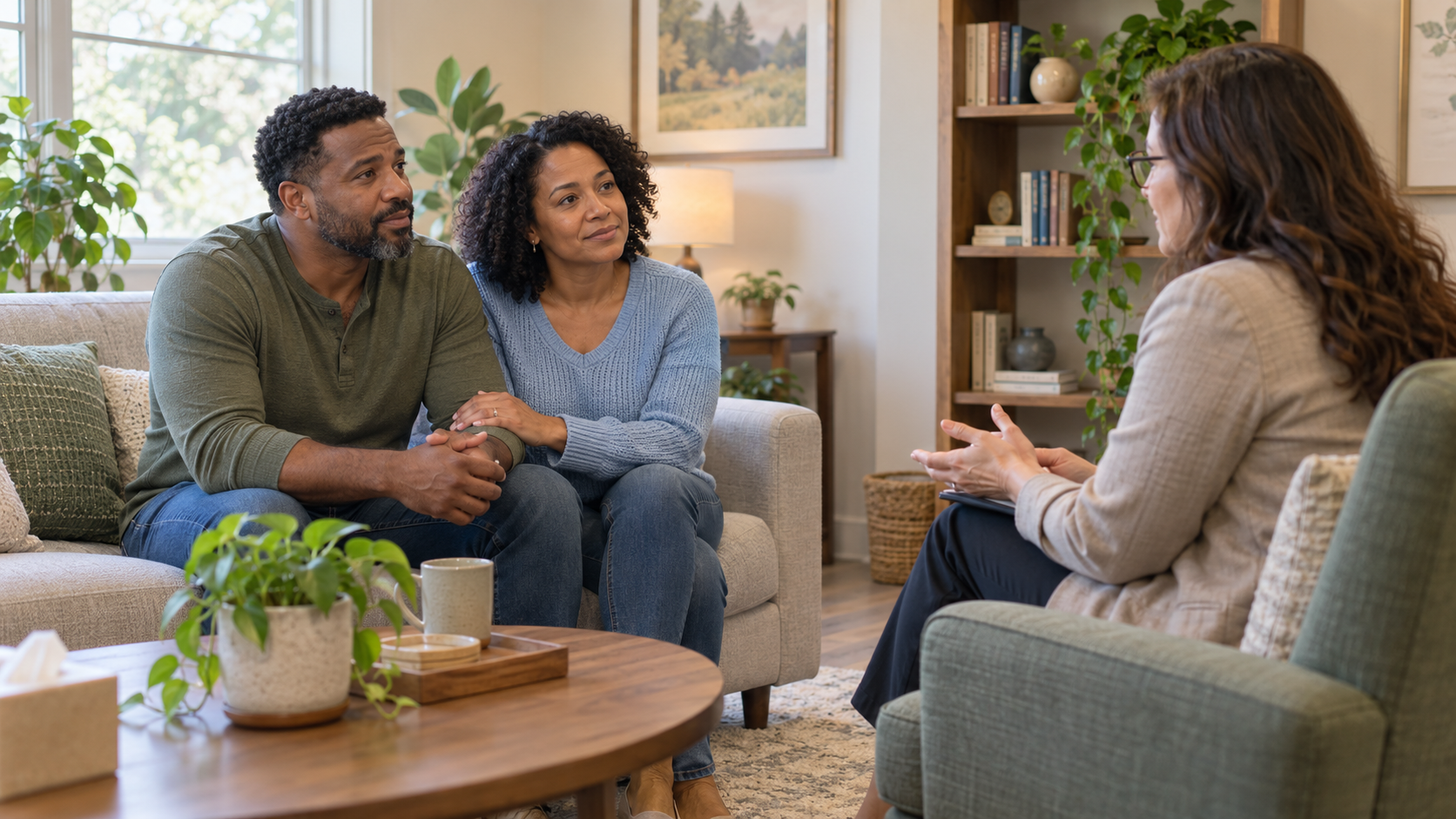
What Couples Can Expect From Their First Session
The first marriage-counseling session should help both partners feel heard, identify recurring patterns, and establish clear goals for moving forward together.
Deciding to begin marriage counseling can feel like a major step. You may wonder whether the therapist will take sides, whether the conversation will become another argument, or whether you will know what to say. These concerns are normal. The first session is not a test of your relationship, and you do not need to arrive with every problem neatly explained.
For couples considering marriage counseling in Fayetteville, GA, the first appointment is an opportunity to slow the conflict down, understand what has been happening, and decide what both partners want to change. At Doute Counseling Services, the work centers on recognizing negative relationship cycles and helping both partners feel heard. Learn more about couples therapy in Fayetteville.
What marriage counseling is designed to do
Marriage counseling is not simply a place to decide who is right and who is wrong. It is a structured process for understanding how each partner experiences the relationship, how recurring interactions become painful, and what changes could help the couple reconnect.
Many couples seek support because of recurring conflict, communication problems, distrust, emotional distance, changes in sexual intimacy, family stress, or a major life transition. Other couples come before the relationship reaches a crisis. Both situations are valid reasons to ask for help.
What happens during the first marriage-counseling session?
1. Both partners have space to describe the relationship
The therapist will usually invite each partner to describe what brought them to counseling and what they hope will improve. You may remember the same event differently, and that is expected. The goal is not to force immediate agreement. It is to understand how each person has experienced the relationship and where the pain or disconnection is occurring.
2. The therapist listens for the cycle beneath the argument
Couples often argue about the same subjects repeatedly, but the deeper pattern may involve feeling dismissed, criticized, unimportant, unsafe, or alone. One partner may pursue a conversation while the other withdraws. The withdrawal can then increase the first partner’s urgency, creating a cycle that neither person intended.
Identifying this pattern helps move the conversation away from blame. Instead of treating one partner as the problem, counseling examines the interaction that keeps pulling both people into the same painful outcome.
3. You begin defining practical goals
A productive first session should begin clarifying what progress would look like. Goals may include communicating without escalation, rebuilding trust, feeling emotionally connected, addressing intimacy concerns, making a major decision together, or understanding whether both partners are willing to work on the relationship.
The goals do not need to be perfect on day one. They can become more specific as the therapist learns about the relationship and both partners become more comfortable with the process.
4. The therapist explains the counseling process
The first appointment should also provide space for questions. The therapist may discuss how sessions are structured, what participation is expected from each partner, how privacy and confidentiality are handled, and what the next phase of care may involve. Ask for clarification whenever a policy or recommendation is unclear.

What should couples bring to the first session?
You do not need a polished presentation or a complete history of every disagreement. A few thoughtful preparations can make the first conversation more useful:
- Identify one or two changes you hope counseling will help you make.
- Think of recent examples that show the pattern, rather than preparing a list of everything your partner has done wrong.
- Be prepared to describe your own reactions as well as your partner’s behavior.
- Write down practical questions about scheduling, fees, confidentiality, or the counseling approach.
- Approach the session with honesty and curiosity, even if you are uncertain about the process.
What if one partner is hesitant?
It is common for partners to enter counseling with different levels of hope, urgency, or confidence. One person may feel ready to begin while the other worries about being blamed or pressured. Hesitation does not automatically mean counseling cannot help. It is useful to name those concerns directly so the therapist can understand what each partner needs to participate honestly.
Meaningful progress does require participation. The first session can help determine whether both partners are willing to examine the relationship pattern, listen to each other’s experience, and practice new ways of responding.
Will the therapist take sides?
A couples therapist should help both partners feel heard while also addressing harmful or unproductive behavior clearly. Supporting both people does not mean pretending every action has the same impact. It means maintaining a balanced process, identifying the interaction that is causing harm, and helping each partner understand their part in changing it.
How quickly will couples see results?
There is no responsible way to guarantee a specific timeline. Every relationship has a different history, level of distress, and willingness to practice change outside the counseling room. Some couples experience relief simply from having a more structured conversation. Deeper concerns involving trust, trauma, addiction, or longstanding disconnection may require more time and additional support.
A better early question is: Do both partners understand the goals, feel heard in the process, and know what they are being asked to work on between sessions? Those are useful signs that counseling has a clear direction.
Marriage counseling in Fayetteville, GA
Working with a local counselor can make ongoing care easier to integrate into your schedule and gives you a clear place to return for follow-up support. Doute Counseling Services provides counseling and coaching from our Fayetteville office and welcomes people from different backgrounds, faiths, identities, and walks of life.
The purpose of the first appointment is not to solve the entire relationship in one conversation. It is to understand what is happening, identify the pattern that keeps creating distance, and determine the next constructive step.
Ready to begin?
If recurring conflict, distrust, communication problems, or emotional distance are affecting your relationship, you do not have to wait until the situation becomes a crisis. Schedule an appointment with Doute Counseling Services or call 678-489-7384 to ask about marriage counseling in Fayetteville, GA.
Information notice: This article is for general educational purposes and does not replace individualized assessment, diagnosis, or treatment from a qualified mental-health professional.
Editorial references
Doute Counseling Services – Couples Therapy
American Association for Marriage and Family Therapy – About Marriage and Family Therapy
Editorial note: References may remain for transparency or be removed from the public version if Jemal confirms that no external source list is required.




You must be logged in to post a comment.